
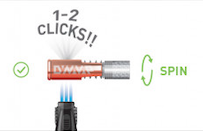
Whilst Vapcaps can’t give you an exact temperature reading, or any reading of any sort to be fair, you’ll gain a rough idea about temperatures the more you use one, and the more you get used to your particular heating tools and methods.
Compound Boiling Points
This refers to the temperatures at which the botanical’s compounds are activated and released.
Knowing the best temperature to vape your botanicals at to attain the required & desired results is important. Even if it’s just being armed with a general idea.
Here’s a temperature guide of a number of botanicals and their compounds’ boiling points, or activation/release temperatures
Rosemary: 125°C – Antioxidant, antibacterial, and pain relieving benefits
Lavender: 130°C – Soothes nerves, has antibacterial effects
Lemon balm: 140°C – Improves and supports relaxation
Hops: 160°C – Slightly euphoric
Peppermint: 160°C – Soothing, beneficial for muscles
Ginger: 180°C – Calm rejuvenated effects. Can block hormones which trigger migraines.
Cloves: 300°C – Helps to keep your mind sharp and helps to prevent memory loss.
Green tea: 180°C – Slightly stimulating.
Chamomile: 190°C – Relaxing, soothing, improves healthy sleep.
Thyme: 190°C – Promotes healthy acidity in the stomach.
Now lets take a look at cannabis, purely as a botanical example.
Every cultivar (aka: strain) has their own collection of beneficial compounds (cannabinoids, flavonoids & terpenes), each with their own unique botanical function, as well being able to be able to combine their benefits which is called ‘the entourage effect’, so you can go check the profiles of your chosen cultivar and then aim for the preferred temperature(s) for you, and the effects that you’re after.
For those who do hold a UK prescription or whom are registered for a Cancard, you’ve made a fantastic choice of Thermal Extraction Device to consume your medicinal botanicals with.
Our bodies are equipped with an endocannabinoid system, a network of receptors throughout our bodies.
Cannabinoids bind to these producing a variety of beneficial effects, which are then further influenced by terpenes and flavonoids (The Entourage Effect).
The reason why certain combinations of these compounds make us feel different is due to their synergistic properties.
– CBD (Cannabidiol) for example modulates the effects of THC and on it’s own can help with cognitive rehabilitation.
– Typically Sativa cultivars have lower doses of CBD and higher doses of THC, giving cerebral positive “highs” and energising, productive, creative and anxiety-reducing effects due to the terpenes present.
Knowledge of these synergies increases their potential use for cannabis-based medicine, enabling medical-science to pin-point and help to treat things like pain, inflammation, infections, depression, anxiety, addiction, epilepsy and (it is documented) even cancer.
A quick-start temp guide for THC & CBD
It depends on what you’re looking for, but you’ll probably want to be somewhere between 160°C and 230°C.
160°C (320°F) – 180°C (356°F):
– Light cerebral effects. Great flavour.
180°C (356°F) – 200°C (392°F):
– Full flavour with increased botanical effects.
200°C (392°F) – 230°C (446°F):
– Clear your diary, relax and enjoy yourself!
Aside from the vast array of cultivars available (which, let’s be honest is going be the main factor/outcome) you’ll begin to realise with your Vapcap that different temperatures also change the effects & flavours of the cannabis that you’re using.
Lower Temperatures
THC has a boiling point of 157°C, so if you vape at this temp or lower then the effects from the cannabis are likely to be quite mild and less “intoxicating”. – Great for those who want to stay alert and or get the best and freshest flavour from their botanicals. The vapour produced from low temps would be cooler and even less irritating to your throat and lungs. Lower temperatures and the compounds that they release are also known to help reduce anxiety and paranoia.
Medium Temperatures
At these temperatures you’ll get lots of tasty terpenes, and more cannabinoids promoting a more prominent high as more THC gets released.
The vapour in this range will be warmer and thicker, and a little dryer.
Higher Temperatures
Recommended for taking full advantage of any cannabinoids on offer.
CBD, CBG, and THC are all far more prevalent at a higher temperatures and so the evenings might suit higher temperatures. – You’ll likely feel far less focused and far more relaxed from the effects!
Far more dense vapour, but less fresh and delicate flavour.
It’s worth noting though that vaping at higher temperatures can runs the risk of throat and lung irritation, and coughing. – A sip of water after each hit solves the problem and keeps you happy and hydrated.
Here are the temperatures needed to activate the most talked-about cannabinoids, terpenes and flavonoids
Cannabinoid Boiling Points
CBG: 126°F / 52°C
THCa: 220°F / 104°C
CBDa: 248°F / 120°C
Δ9THC: 315°F / 157°C
Δ8THC: 350°F / 177°C
CBD: 356°F / 180°C
CBN: 365°F / 185°C
THCv: 428°F / 220°C
CBC: 428°F / 220°C
CBG is thought to play a role in enhancing pleasure and motivation, in regulating appetite and sleep, and alleviating pain.
THCa is the precursor to THC in that THCa becomes THC when heated. THCa in it’s raw form helps to relieve inflammation and pain, an ideal cannabinoid for treating arthritis. It’s also beneficial in the treatment of conditions such as Chiari Malformation, Multiple Sclerosis, Alzheimer’s and Parkinson’s disease.
CBDA (Cannabidiolic acid) has major therapeutic potential and has been used to treat inflammation, anxiety, seizures, and certain types of cancer. CBDA is now seen as the next frontier in cannabinoid-based therapy.
Δ9THC (delta 9) is responsible for providing the “high” associated with smoking cannabis.
Δ8THC (delta 8) induces a mellow physical effect. It’s often known as the “legal THC”.
CBD (cannabidiol) is known to help things like can affect things like pain, mood, sleep, and memory.
CBN is thought to be more helpful for sleep, stimulating appetite, and treating pain than CBD
THCv can help suppress appetite.
CBC is an anti-inflammatory which may contribute to the pain-killing effect of cannabis.
Terpene Boiling Points:
Terpenes are compounds (about 100 confirmed) which are responsible for the aroma and flavours of cannabis, and it’s been confirmed that they support cannabinoids in producing desired botanical effects.
A-Pinene: 311°F / 155°C (often present in Sativa)
β-Caryophyllene: 320°F / 165°C (often present in Indica)
β-Myrcene: 334°F / 168°C (often present in Indica)
Citronellol: 437°F / 225°C
d-Limonene: 349°F / 176°C (often present in Sativa)
Eucalyptol: 349°F / 176°C
Terpinolene: 365°F / 185°C
Linalool: 388°F / 198°C (often present in Indica)
Humulene: 388°F / 198°C (often present in Indica)
Phytol: 399°F / 204°C
Caryophyllene oxide: 495°F / 257°
A-Pinene, the most widely encountered terpenoid in nature has distinctive aromas of pine. Used in medicine as an anti-inflammatory, expectorant (used to treat coughs), bronchodilator (causes widening of the bronchi, eg: any taken by inhalation for asthma) and local antiseptic, and has shown anti-cancer activity. It is also believed that the effects of THC may be lessened when mixed with pinene.
β-Caryophyllene (Indica) is an essential oil of Cannabis sativa, rosemary, and hops.
β-Myrcene (Indica) is known for its sedating, relaxing effects.
Citronellol is often used as a skincare ingredient with a a sweet, floral scent in products, such as shampoos, lotions, and creams.
d-Limonene (Sativa) This citrusy terpene is the major constituent in citrus fruit rinds, rosemary, juniper, peppermint, and several pine needle oils. Cultivars high in limonene promote a general uplift in mood and attitude. Limonene is highly absorbed by inhalation, and quickly appears in the bloodstream and also assists in the absorption of other terpenes through the skin and other body tissue. It’s well documented that limonene suppresses the growth of many species of fungi and bacteria. Limonene may be beneficial in protecting against various cancers, and orally administered limonene is currently undergoing clinical trials in the treatment of breast cancer. Limonene has been found to even help promote weight-loss. Plants use limonene as a natural insecticide to ward off predators. Limonene was primarily used in food and perfumes until a couple of decades ago, when it became better known as the main active ingredient in citrus cleaner.
Eucalyptol has a fresh mint-like smell and a spicy, cooling taste.
Terpinolene (Sativa) is thought to contribute to cerebral stimulation, heightened energy and “a fast and erratic thought pattern” often leading to productivity and focus.
Linalool (Indica) has been described as having floral and lavender undertones which promote calming, relaxing effects.
Humulene (Indica) is found in hops, cannabis sativa strains, and Vietnamese coriander, among other naturally occurring substances. Humulene is considered to be anti-tumor, anti-bacterial, anti-inflammatory, and suppresses appetite.
Phytol is grassy and balsamic in odor, and is naturally produced in green tea.
Caryophyllene oxide is the only terpene that can bind with the CB2 receptors in the human body making it highly beneficial for medicinal use. Used as an anti-inflammatory, local anaesthetic, and natural insect repellent, it tends to have a spicy, musky, and funky profile carrying notes of diesel fuel that can cause your nose to tingle.
Flavanoids
Found throughout nature in flowers, fruits and vegetables, there are thousands of known flavonoids, but some are known to only be found in cannabis. These are known as cannaflavins.
Similar to terpenes, flavonoids contribute to a plant’s aroma and flavour profile, and in how we perceive the quality and strains of the cannabis. They provide colour pigmentation, fragrance, flavour, and protection to the plant, and research shows that flavonoids might offer their own unique medicinal and therapeutic effects to us too.
There have been 20 highly active flavonoids confirmed in cannabis so far.
These are all proven to have anti-oxidative effects vas well as being anti-inflammatory, anti-fungal, antioxidant, and anti-cancer potential. – Future studies look to be both intriguing and beneficial.
Flavonoids are thought to have similar synergistic abilities. Whether they enhance or modulate the cannabinoids’ properties isn’t fully known yet.
Flavonoid Boiling Points
apigenin: 178°C/352.4°F – A yellow crystalline solid that has been used to dye wool.
quercetin: 250°C/482°F – A known anti-fungal and antioxidant. Used as a food supplement to reduce allergic responses or to boost immunity.
cannflavin A: 182°C/359.6°F – Found in Cannabis sativa but unrelated to THC and other cannabinoids. Studied for potential use as anti-inflammatory agent.
B-sitosterol: 134°C/273.2°F – Has a chemical structure similar to that of cholesterol. It is a white, waxy powder with a characteristic odor, and is one of the components of the food additive E499.
Catechins: – Known to be an antioxidant with cardiovascular health benefits.
apigenin is a yellow crystalline solid that has been used to dye wool.
quercetin is a known anti-fungal and antioxidant. Used as a food supplement to reduce allergic responses or to boost immunity.
cannflavin A is found in Cannabis sativa but unrelated to THC and other cannabinoids. Studied for potential use as anti-inflammatory agent.
B-sitosterol has a chemical structure similar to that of cholesterol. It’s a white, waxy powder with a characteristic odor, and is one of the components of the food additive E499.
Catechins is known to be an antioxidant with cardiovascular health benefits.